Sponsored By:
SpaceX could file its confidential IPO prospectus with the SEC THIS WEEK. The company aims to seek a staggering $1.75 trillion valuation and become the largest stock market debut in history. The IPO could raise up to $80 billion, with individual investors getting access to 30% of shares via E*trade, Robinhood and SoFi.
This puts SpaceX on track for a late June listing after the typical 3-month SEC review. The pitch focuses on three explosive businesses: space launch, Starlink, and orbital data centers. This is moving forward on schedule for a June or July listing.
Get Your Urgent SpaceX Report*By clicking the link above you'll receive emails from IPO Watch and Ian Wyatt. You are also agreeing to the terms of our privacy policy. Unsubscribe at any time.

A reflection on a Buick Skylark, the car as an American lifeline, and what it means when mobility gets priced out of reach.
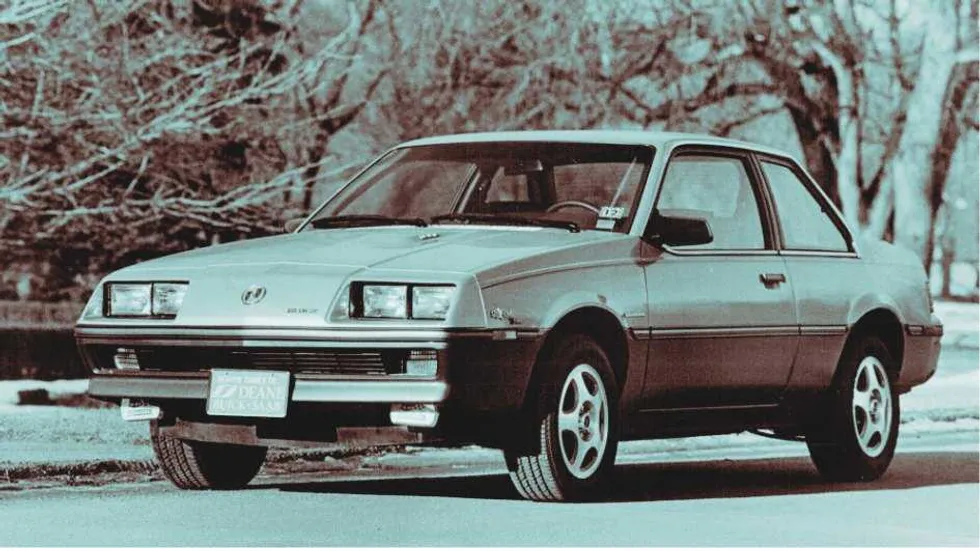
Image via TheBlaze
Ode to a 1984 Buick Skylark — and to all the other cars of my life
TheBlaze was out with a piece that landed like an old song on the radio you haven’t heard in years: “Ode to a 1984 Buick Skylark — and to all the other cars of my life.” It’s not really about one car, not in the strict sense. It’s about the way a certain set of keys could feel like a passport—how America, for better and worse, has been built around four wheels and the promise that if you can drive, you can go.
The article leans into a plain truth we don’t say out loud much anymore: cars aren’t just transportation here; they’re lifelines. They’re how we get to work, how we see our people, how we take a Saturday and make it bigger than the week that came before it. The author’s affection for that ’84 Skylark isn’t the glossy, collector-car kind of nostalgia. It’s the lived-in kind—an appreciation for the imperfect machines that carried us through ordinary days that, looking back, weren’t so ordinary at all.
And underneath the reminiscing there’s a quiet cultural claim: that the American story, especially outside big coastal cities, has long been written in commutes, road trips, parking lots, and the hum of an engine that means you’re not stuck. In a time when we argue about everything, the piece is almost disarming in how it praises something simple—mobility, independence, the ability to say, “I’m going,” and then actually go.
✍ My Take: I read that and I thought about my dad in 1979, sitting at the kitchen table with the newspaper folded back like a placemat, muttering about inflation the way a man talks about a leak in the roof—something you can’t ignore because it ruins everything underneath it. Gas lines were in the air back then, even when you weren’t in one. People planned errands like military campaigns. And still, the car meant freedom. Even when money was tight and prices were jumping, you could point the hood toward a better mood. You could pick up extra shifts, drive across town to see family, take the long way home just to clear your head. That kind of everyday freedom is easy to take for granted—right up until it starts getting priced out of reach. What worries me now isn’t that we’ll stop loving cars. Americans will always love cars. What worries me is the slow squeeze that turns a basic necessity into a luxury—higher sticker prices, higher interest rates, higher insurance, repairs that require a computer science degree, and a market that nudges you into financing terms your grandfather would’ve called “fancy trouble.” And when driving becomes harder to afford, it doesn’t just change what’s in the driveway. It changes the shape of a life. It narrows the map. It makes a job opportunity or a doctor’s appointment feel farther away than it should. I also can’t help thinking about Main Street—what it looked like before big-box stores and before half the storefronts turned into empty windows with leasing signs sun-faded at the corners. Back then the car didn’t just take you to a place; it supported a whole ecosystem of places: the local garage where somebody knew your name, the diner where you could sit at the counter without feeling rushed, the parts store with a guy behind the register who’d actually come out and look. We didn’t romanticize it at the time. We were too busy living it. But there was a sturdiness to that world that we could use more of now. Still, I’m not writing this to mourn. If anything, that Skylark ode is a reminder that people are resilient, and that meaning doesn’t require perfection. The next chapter of the American car story—whether it’s hybrids, EVs, or something we haven’t named yet—ought to keep faith with the best part of the old one: ordinary families being able to move, work, visit, and belong without feeling like the road is only for the rich. And I think we can get there if we insist, calmly and steadily, that progress should serve the people who punch the clock and keep the lights on.
Read the full story at TheBlaze →
Until next time, keep your headlights clean and your heart pointed home.
— Jack Reynolds