Oil markets are shifting as Venezuela's disruption removes critical barrels while spare capacity shrinks. Supply pressure is building before headlines catch up — and smart traders are positioning now.
Our exclusive briefing reveals three energy stocks emerging from this supply shock, plus the key signals to monitor as this setup evolves. This is about preparation, not prediction.
Get the Free Oil Trading ReportBy following the links above, you're opting in to receive valuable updates from Wealthiest Investor News plus 2 bonus subscriptions. Your privacy is important to us. You can unsubscribe anytime. See our privacy policy for details.

Tonight we’ve got a ’35 Ford coupe with a modern punch, a reminder of the hard-edged days of big-city reporting, and a welcome glimpse of Stockard Channing—still carrying that old Hollywood spark.
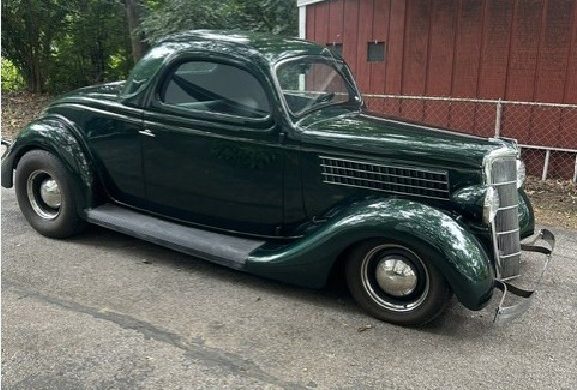
Image via Barn Finds
A ’35 Ford Coupe With A 350 Under The Hood: The Kind Of American Ingenuity You Can Hear
There’s something about a 1935 Ford coupe that feels like a time machine even before you turn the key. It’s the curve of the fenders, the way the roofline sits just right, and the sense that this car came from an America where folks weren’t afraid to get their hands dirty. This particular coupe, now running with a 350 V8, is a reminder that hot rods were never meant to be identical—each one is a signature, not a factory stamp.
Hot rodding always had that neighborly, garage-light spirit to it. One fellow would swear by a certain engine, another would argue for a different stance, and everybody had an opinion about wheels and paint. What mattered most was the craftsmanship and the idea: take what you’ve got, make it better, and make it yours.
Even if you’ve never built a car, you can recognize the attitude in a build like this—practical, proud, and personal. It’s the same spirit that built small businesses, fixed up old homes, and kept Main Street running: do the work, do it right, and let the results speak for themselves.
📺 Jack's Thoughts: I’ve always believed a good hot rod is rolling proof that freedom isn’t just something you talk about—it’s something you do. A car like this reminds me of when people solved problems with tools and patience instead of waiting for permission. If we want the country to feel a little more like it used to, we could stand to celebrate this kind of hands-on pride again.
Image via All That’s Interesting
Paul Avery And The Zodiac: When Reporting The News Could Put A Target On Your Back
In the late 1960s and early ’70s, San Francisco Chronicle reporter Paul Avery covered one of the most unsettling stories in modern American crime: the Zodiac Killer. It wasn’t just a case with violence—there were letters, codes, taunts, and that creeping feeling that the killer wanted attention as much as he wanted harm. Avery wrote about it with the kind of grit that old-school city reporters were known for, when newspapers felt like the front porch of public life.
But the story didn’t stay on the page. After Avery’s reporting, he reportedly received an eerie message connected to the case, a reminder that the line between observer and participant can get thin in a hurry. In those days, a journalist could find himself pulled into the orbit of the very darkness he was trying to expose.
Reading about Avery now brings back the era of hard deadlines, ringing phones, and the smell of ink—when newspapers were thick, and the people writing them were often tough as shoe leather. It also reminds you that the job wasn’t just typing words; it could mean real risk, real pressure, and the burden of knowing the public was depending on you to tell the truth clearly.
📺 Jack's Thoughts: I miss the days when reporters were expected to be steady, skeptical, and brave, even when the story got ugly. Avery’s experience is a sobering reminder that evil doesn’t just happen—it sometimes tries to intimidate anyone willing to shine a light on it. The best answer, then and now, is a press that remembers its duty to the public and a community that refuses to be frightened into silence.
Stockard Channing Steps Out Again: A Familiar Face From When The Movies Had Heart
Stockard Channing, forever remembered by many of us as the quick-witted, cool-as-ice Rizzo from Grease, has made a rare public appearance at 82. For folks who grew up when movie stars felt a little more mysterious—and a little more like part of the family—seeing her again is like bumping into an old friend you haven’t seen since high school.
The appearance comes in connection with a reunion involving the cast tied to Practical Magic 2, bringing together names that have been part of America’s moviegoing life for decades. It’s a reminder of an era when you’d plan your evening around what was playing, maybe grab popcorn, and let a film lift you out of your worries for a couple of hours.
What stands out is how warmly people respond when a familiar face returns. It says something good about us: we remember. We keep room in our hearts for the performers who gave us laughter, romance, and the kind of characters that still show up in family conversations years later.
📺 Jack's Thoughts: I’m glad Stockard Channing can step into the light on her own terms, because dignity used to matter more than constant exposure. The old stars didn’t need to live in front of a camera to be appreciated—they earned their place with talent and presence. It’s comforting to see that, even now, a lot of Americans still value grace, privacy, and a well-lived life.
That’s the evening paper from my porch to yours. However fast the world spins, there are still good machines, brave souls, and familiar faces that remind us who we are—and tomorrow’s another chance to carry the best of the old days forward.
— Jack Reynolds