With government debt soaring and inflation still biting, smart investors aren't waiting for volatility to hit — they're preparing now. The Gold Wealth Blueprint breaks down exactly how gold has historically shielded portfolios during periods of fiscal strain and market uncertainty.
Inside, you'll discover why gold moves differently than paper assets, how to use it as a practical hedge, and how to size your exposure without overcommitting. It's concise, actionable, and free — but don't sit on it.
Get the Free Gold Wealth BlueprintBy following the link above, you're choosing to opt in to receive insightful updates from Investor News + 2 free bonus subscriptions. Your privacy is important to us. You can unsubscribe anytime. See our privacy policy for details.

Tonight we take a slow drive back through American craftsmanship, hometown music, and old Hollywood grace — the kind that didn’t need to shout to be remembered.
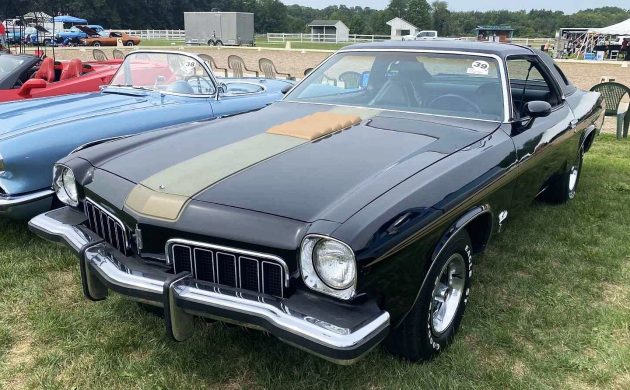
Image via Barn Finds
Estate Find: The 1973 Hurst Olds, When Muscle Still Had Manners
Every so often, a car turns up that feels less like a machine and more like a time capsule. This estate-find 1973 Oldsmobile Hurst Olds comes from that brief era when the muscle-car world was changing fast, yet a few bright sparks still refused to go out. While plenty of automakers were easing off the throttle in the early ’70s, the Oldsmobile-Hurst partnership kept the spirit alive with a fresh fourth-generation model that still knew how to stand tall in a driveway.
There’s something especially touching about an estate find, because it usually means a real person lived with it, cared for it, and built memories around it. You can almost picture the original owner washing it on a Saturday morning, radio on, hose in hand, taking pride in an American-made statement of style and strength. Even sitting still, a car like this reminds you of a time when you could tell what somebody drove from half a block away — and it said something about who they were.
📺 Jack's Thoughts: I’ve always believed cars like the Hurst Olds represent more than horsepower — they represent pride in making things that last and enjoying them responsibly. Back then, power came with a kind of polish, and even the loud machines seemed to have good manners. If this one gets restored and driven, I hope it’s taken to shows, to church parking lots, and to the occasional ice cream stand — right where a classic belongs.

Image via Country Living
Bristol Still Knows the Tune: Where Country Music Was Born, Community Keeps It Alive
Nearly a century after the Bristol Sessions helped define country music, Bristol, Tennessee-Virginia is still doing what good American towns do best: turning history into a living tradition. The story isn’t just about what happened in a studio long ago — it’s about what happens now in the streets, shops, and gathering places where neighbors still recognize one another. The community-driven festival and that walkable downtown are proof that a place doesn’t need to be big to matter.
Country music has always been at its best when it’s honest and close to the ground — songs about work, home, faith, mistakes, and second chances. Bristol’s continued celebration of its roots feels like a reminder that culture isn’t something you import from far away; it’s something you build together, year after year, with local hands and familiar voices. In a world that’s gotten awfully digital and hurried, it’s comforting to know there are still towns where the calendar revolves around real gatherings and shared pride.
📺 Jack's Thoughts: What I love about Bristol is that it treats heritage as something you pass forward, not something you lock behind glass. When a community shows up for a festival, supports the local storefronts, and teaches kids why the songs mattered, that’s how America stays stitched together. If more places did what Bristol does — make room for tradition, welcome newcomers kindly, and keep the hometown heartbeat steady — we’d all feel a little less scattered.
Greta Garbo’s Great Vanishing: When a Star Chose Privacy Over Applause
In the old Hollywood days, fame could swallow a person whole, even when the lights looked glamorous from the outside. Greta Garbo rose to the very top — 28 films, four Oscar nominations, and an aura that made her larger than life — and then, at 35, she stepped away. The piece revisits how a Swedish actress became one of cinema’s most enduring mysteries, not because she kept performing, but because she chose not to.
It’s hard for folks today to imagine walking away at the height of success, especially when every system around you encourages more: more screens, more headlines, more appearances. Garbo’s story carries a different kind of strength — the quiet kind. She seemed to understand that a person’s life is not the same thing as their public image, and that constant attention can be a poor substitute for real peace.
📺 Jack's Thoughts: I respect anyone who knows when to step back and live a real life, even if the world begs them to stay on stage. Garbo’s choice feels almost old-fashioned now, like the days when privacy was a given and dignity didn’t require an explanation. There’s a lesson in her exit: success is fine, but it isn’t worth losing yourself.
That’s all for tonight, friend. Whether it’s a classic Olds waiting for a second chance, a small town keeping the music warm, or a movie star choosing quiet over noise, it all points to the same truth: what’s good doesn’t disappear — it just needs tending. Sleep well, and we’ll take another trip back tomorrow night.
— Jack Reynolds