That "Trump Bump" Social Security raise? Already gone. Medicare premiums, gas, groceries — they've swallowed every penny before it hits your account. Meanwhile, your benefits have already lost 13.7% of their purchasing power since 2016, and the system would need to raise checks by 15.7% just to break even. You're getting $81. You needed $296.
Central banks have been quietly buying one specific asset at the fastest pace in 50 years — and JP Morgan now sees it hitting $8,000. Smart retirees aren't waiting on the next COLA. They're protecting what's left right now. Get the free guide and see the 3 steps disciplined retirees are using to outrun the inflation Washington can't stop.
Get the Free Wealth Preservation GuideThis is an advertisement from First Ballot. If you no longer wish to receive First Ballot promotionals, please let us know. Or write to: 5005 Lyndon B. Johnson Fwy. Suite 350, Dallas, TX 75244

Tonight we swing by the garage, spin a 45 in our minds, and take a quieter look behind the bright lights—three reminders that the past still has lessons for the present.
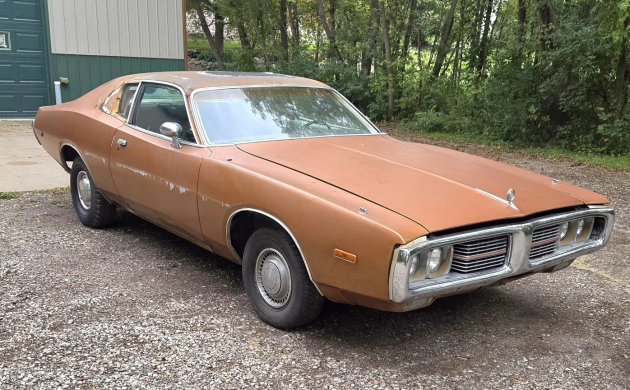
Image via Barn Finds
Worth Saving? A 1974 Dodge Charger SE Waiting for a Second Chance
There was a time when you could tell what kind of weekend a man had just by the car he pulled into the driveway. The Dodge Charger earned that kind of reputation in the late 1960s, and even as the years rolled on and designs changed, the name still carried a little electricity. This 1974 Charger SE comes from that later stretch of the era, when the B-body redesign that began in 1971 was nearing its final lap before the Charger moved on to a different platform.
What makes a car like this interesting isn’t just the spec sheet; it’s the way it represents a turning point. By 1974, America was feeling the squeeze of new regulations, changing tastes, and the first real hints that the muscle-car party wasn’t going to last forever. Still, the SE trim tried to keep a touch of comfort and style in the picture, the kind of “personal car” feel folks were buying when practicality started elbowing horsepower to the side.
If you’ve ever walked past an old car sitting quiet and dusty and felt that tug in your chest, you know the question isn’t only whether it can be saved. It’s whether the story deserves another chapter. A Charger from this period may not draw the same crowd as a 1969 R/T, but it’s part of the same family album—and those middle chapters matter, too.
📺 Jack's Thoughts: I’ve always believed we ought to be careful about what we toss aside just because it isn’t the flashiest version of the memory. A 1974 Charger SE won’t please every purist, but it’s a real artifact from the years when American drivers were learning to adapt without giving up identity. If someone has the patience to restore it with respect, they’re not just saving a car—they’re saving a slice of how we lived.

Image via Far Out Magazine
The Jam’s 1977 Spark: When a Debut Song Told the Future to Hurry Up
In the late 1970s, you could practically feel music changing under your feet. Radio was still a shared fireplace in the living room, but kids were getting quicker, louder, and more restless—and bands that meant what they sang were pushing through. According to the Rock and Roll Hall of Fame, one song from The Jam’s 1977 debut stands out as the kind that didn’t just arrive, it redirected traffic.
The Jam had that rare combination: sharp musicianship, a sense of purpose, and a sound that could be both urgent and clean. Their early work carried the snap of punk-era energy, but it wasn’t sloppy or careless—it was focused, like young people finally finding words for what they’d been feeling all along. When a debut is “unignorable,” it’s usually because it captures something true about the moment.
Looking back, it’s easy to forget how many musical crossroads America and Britain shared in those years. Whether you were buying a record with your allowance money or hearing it through a friend’s bedroom wall, a song like that could mark your time. It didn’t need to be polite; it just needed to be honest—and it opened a door a lot of bands walked through afterward.
📺 Jack's Thoughts: I miss when a song could sound like a statement instead of a product. The Jam’s early punch reminds me that young people don’t need to be coddled—they need something real to grab onto, and sometimes a three-minute song can do more than a thousand speeches. If the Hall of Fame says it changed the course of music, I can understand why: it’s the sound of conviction meeting craft.

Image via All That’s Interesting
Marilyn Monroe’s Missing Father: A Quiet Refusal Behind a Very Public Life
Old Hollywood had a way of turning people into legends, but it couldn’t always fix what was broken at home. A little-known part of Marilyn Monroe’s story centers on Charles Stanley Gifford, the man identified as her father, who reportedly had a brief affair with her mother and later refused to establish a relationship with Marilyn—even after she became one of the most famous faces on earth.
Fame can fill a room, but it can’t fill certain empty spaces. When you read about a parent choosing distance—choosing not to know their child—it lands with a particular heaviness, especially because it’s so ordinary in a way. Not everyone abandons a family with dramatic headlines; sometimes it’s just a long chain of “no’s,” and the child carries the weight for a lifetime.
In the America many of us remember, there was a strong expectation that adults owned their responsibilities. People made mistakes then, too—plenty of them—but there was also a cultural understanding that you did right by your children, even when life got complicated. Stories like this aren’t told to shame the past; they’re told to remind us what children need most: someone who shows up, year after year, whether the cameras are there or not.
📺 Jack's Thoughts: What strikes me is how a person can refuse a relationship and still leave fingerprints all over someone’s life. Marilyn Monroe didn’t need a famous father; she needed a present one, and that’s a hard truth that hasn’t changed with the decades. If we want a healthier country, we could start by treating family duty as something sacred again—quietly, consistently, and without excuses.
That’s all for tonight, friend. The old days weren’t perfect, but they still teach us plenty: keep what’s worth saving, listen for the voices that mean what they say, and show up for the people who count on you. We’ll meet again tomorrow evening—same warm lamp in the window, same hope that steady hands can still build a good life.
— Jack Reynolds