One warehouse robotics company is sitting on a $22.7 billion order backlog — contracts signed, revenue incoming — and its stock is down 16.6% in the past month. That disconnect is exactly the kind of setup worth paying attention to. Heading into 2026, analysts screened the entire robotics sector and found 7 stocks with compelling cases: a pure-play warehouse name with $2B cash and zero debt, a semiconductor robotics firm that nearly doubled quarterly revenue year-over-year, and a robotic surgery company placing hundreds of next-gen systems while trading 31% below its 52-week high.
Every name and the full case behind it is available in a free report — no forms, no friction. Backlogs that size take time to convert, which means the window to understand these setups is open right now. Don't wait.
Get Your Free Robotics ReportBy clicking this link you agree to receive emails from TradingTips and our affiliates. You can opt out at any time. — Privacy Policy

Tonight we tip our hat to the autumn rituals that shaped childhood, a Corvette that still speaks the old language of horsepower, and the mysterious violin that closes one of rock’s greatest anthems.

Image via Mental Floss
The Fall Traditions That Used to Find You Without a Phone
There was a time when autumn didn’t need an announcement. You could smell it. You could hear it under your feet. And you could see it in the way kids came home with cheeks red from the cold and hands dirty from some project that started as “just for a minute” and turned into the whole afternoon. Mental Floss rounded up a list of fall traditions many kids barely experience anymore, and reading it felt like flipping through an old family album.
Some of those old rituals have been regulated out of existence, and a few probably were a little rough around the edges if we’re being honest. Burning leaf piles, riding in the back of a pickup to the pumpkin patch, or sipping cider that hadn’t been tamed and sanitized for modern shelves. But what really disappeared wasn’t just the activity, it was the texture of the season: neighbors outside at the same time, kids roaming in packs, and the sense that fall belonged to everyone, not just to a calendar app and a weekend schedule.
What I hope we don’t lose is the lesson hiding inside those traditions: a healthy respect for nature, a little independence for young people, and the habit of making memories with what’s right in front of you. You didn’t need much. A rake, a sweatshirt, a porch light that meant “time to come in,” and the feeling that the world was big but your neighborhood was safe.
📺 Jack's Thoughts: We were right to make some things safer, but we’ve also gotten too quick to fence off every rough edge of childhood. A kid needs a little room to roam, to get cold, to get messy, and to learn common sense the old-fashioned way. This fall, I’d love to see families bring back a few simple traditions that don’t require a purchase, just presence. The best ones still fit neatly on a front porch.
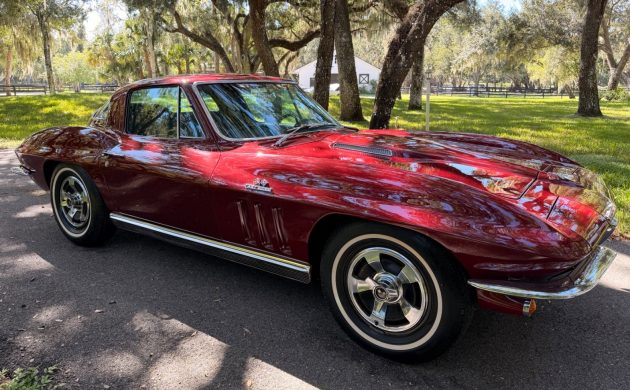
Image via Barn Finds
A 1966 Corvette That Still Knows How to Introduce Itself
Every now and then, a classic car listing comes along that isn’t just about chrome and numbers, it’s about a certain American confidence. Barn Finds pointed to a no-reserve 1966 Chevrolet Corvette with a 427 and a 4-speed, and if you grew up when performance was something you could hear two blocks away, you already know why that combination makes people lean in.
The write-up notes how sellers try all sorts of angles when they list a beloved classic, from flattering photos to a careful emphasis on the best parts of the story. But a mid-60s Corvette with big-block power and a proper manual transmission doesn’t need much poetry. It’s the kind of car that reminds you of Saturday mornings spent reading the classifieds, of service-station conversations that turned into friendships, and of an era when “driver engagement” wasn’t a marketing phrase, it was just the way a car was built.
No-reserve auctions have their own kind of honesty, too. They’re a little like the old days when you shook hands, looked a man in the eye, and accepted that the market would speak. However it lands, it’s nice to see a machine like this still stirring up excitement, because it means the memory of American craftsmanship and ingenuity hasn’t gone quiet.
📺 Jack's Thoughts: I’ll always have a soft spot for cars that ask something of the driver, because responsibility and freedom are meant to travel together. A big-block Corvette isn’t practical, and it was never trying to be, it was a celebration of what Americans could build when they aimed high. I hope whoever buys it drives it, maintains it, and lets younger folks see that history isn’t only something behind glass. Some lessons are best taught with a clutch pedal.

Image via Far Out Magazine
That Haunting Violin at the End of “Baba O’Riley” and the People Who Made It Possible
There are songs that don’t just play, they live in the walls of your memory. The Who’s “Baba O’Riley” is one of them, and Far Out Magazine dug into a question fans have asked for years: who plays the violin at the end of that 1971 classic? It’s a fair question, because that outro feels like a door opening into another room, equal parts wild joy and something like goodbye.
That’s the magic of the best records from the ‘60s and ‘70s: big personalities, yes, but also a whole world of musicians, producers, and collaborators behind the curtain. Back then you’d stare at album credits like they were sacred text, trying to piece together how a sound got made. And when you learned the names, it felt like joining a quiet little club of people who cared how the music was built, not just how it charted.
What strikes me is how that violin part still stops people in their tracks all these decades later. It proves that craft matters. A great performance doesn’t expire, and a great recording can still make a teenager in 2026 feel the same shiver you felt the first time it came through a car speaker on a late-night drive.
📺 Jack's Thoughts: I like that people still ask who played what, because it shows we haven’t fully surrendered to disposable culture. The old albums rewarded curiosity, and they reminded us that excellence usually comes from teamwork and discipline, not shortcuts. If you’ve got young folks around, put the song on and tell them to listen all the way to the end, no skipping. They might discover that the past still has plenty to say, and it says it beautifully.
That’s the night’s little journey back. Wherever you are, I hope you find a small piece of the old season again this week, a song worth playing twice, a memory worth retelling, and a reason to believe tomorrow can still be steady and good.
— Jack Reynolds