Today’s Sponsor
The Fed held rates, inflation is still above target, and uncertainty is rising — that means the "buy anything AI" trade is over. Smart money is rotating fast toward the companies actually building AI infrastructure: chips, cloud capacity, and mission-critical data tools. Big Tech alone is projected to spend $635B–$665B on AI in 2026 — and not all of it is going where most investors are looking.
We've identified 9 AI stocks worth watching right now — including a lesser-known chip name tied to U.S. AI infrastructure, a cloud player with improving setup, and a data analytics company with government exposure. This isn't hype. It's about following where capital is actually being deployed.
Get the Free Report NowBy clicking the link above, you will receive this free report and a free subscription to the StockEarnings daily email newsletter. You are also agreeing to the terms of our Privacy Policy. Unsubscribe at any time.

Monday night reflections on the kind of music, machines, and memories that remind us who we are when the world feels like it’s moving too fast.

Image via Men's Journal
When a Simon & Garfunkel Classic Met the Cold Shoulder
Fifty-seven years is a long time for any recording to stay alive in the public ear, but some songs don’t just survive, they settle into the woodwork of American life. One of Simon & Garfunkel’s most beloved tracks was recorded this week back in 1969, the kind of song people can still hum while washing dishes or driving home after dark with the radio low.
What’s always struck me is how a tune that can bring a room to a hush can still catch criticism decades later. The piece notes that some reviewers have gone so far as to call it “mediocre,” which says more about the fashion of criticism than it does about the song itself. In the era when it was made, a good song wasn’t trying to win an argument; it was trying to tell the truth in three or four minutes.
There’s something comforting about remembering that the work endures even when the chatter doesn’t. The record is still here, still doing its job, still reaching across time to tap you on the shoulder and say, “You felt this once, and you can feel it again.”
📺 Jack's Thoughts: I’ve never been too worried about critics using fancy words to dismiss something ordinary people love. In the America I grew up in, we didn’t need permission to call a song great if it carried us through a hard season or brought us back to ourselves. If a track can do that for millions of families over half a century, it isn’t mediocre; it’s a companion.
Listening to the Drag Racing Greats While They’re Still Here to Tell It
There’s a special kind of history you can’t get from a plaque on a wall or a perfectly edited documentary. You get it when the people who were actually there sit down, lean back, and tell you what it sounded like, what it smelled like, and what it cost them to chase speed in the days when the sport was still finding its shape.
A seminar spotlighting Drag Racing Living Legends brings that kind of first-hand memory to the foreground, tied to the world of classic cars and the old circuits where courage was measured in elapsed time. The golden age of drag racing wasn’t just about loud engines and fast passes; it was about neighborhoods of mechanics, weekend crews, and fathers and sons learning what responsibility looks like when you’re holding something powerful in your hands.
What I appreciate most is the reminder that living history is exactly that: living. The stories are still with us, carried by people who can still say, “Here’s how we did it,” in a way that makes the past feel close enough to touch.
📺 Jack's Thoughts: We should treat living legends the way we used to treat elders at the dinner table: listen closely and don’t rush them. A country stays steadier when it remembers where its confidence came from, and a lot of that confidence was built in garages, at tracks, and on long drives home after a good night’s work. If you get the chance to hear these folks speak, go—because one day the stories will only be secondhand.
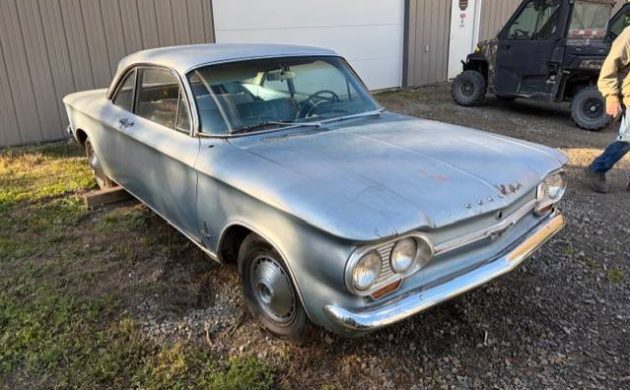
Image via Barn Finds
A 1964 Corvair That Reminds You Why “Runner” Still Matters
Every now and then a modest car comes along that feels like a small invitation: not to show off, but to get your hands dirty and bring something honest back to life. This featured 1964 Chevrolet Corvair is described as a “runner,” and if you’ve ever dragged home a car that starts, moves, and gives you hope, you know exactly why that word carries weight.
The 1964 model year is an interesting waypoint for the Corvair, because Chevrolet made meaningful improvements even with a redesign waiting in the wings for 1965. Among the changes mentioned is the addition of a transverse rear leaf spring, meant to sharpen the car’s manners and make it more predictable. That’s the sort of practical engineering step that reminds you Detroit used to believe in refining something instead of constantly reinventing it for the sake of novelty.
What I like most about a car like this is the scale of the dream. It doesn’t demand a museum budget or a television crew; it asks for patience, steady weekends, and the kind of pride that comes from doing a job right. In a world that’s always trying to sell us “new,” an old runner quietly says, “Fix what you’ve got.”
📺 Jack's Thoughts: I have a soft spot for cars that aren’t perfect but are willing, because that’s how most of us have lived our lives. A running Corvair isn’t just transportation; it’s a chance to practice thrift, workmanship, and follow-through—values that never go out of style. If you can save a driver like this, you’re not just buying a car; you’re keeping a little piece of practical American know-how on the road.
That’s all for tonight. Hold on to the songs that still make you feel something, learn from the folks who were there before the stories fade, and take pride in fixing what can be fixed. Tomorrow’s another day, and there’s still plenty worth preserving.
— Jack Reynolds