While other sectors stall, AI investment is accelerating — showing up in earnings calls, corporate budgets, and real-world deployment. Capital is quietly concentrating around companies with clear demand and long-term relevance, and selective opportunities are forming right now.
A new research brief identifies 2 AI stocks trading under $15 that may be positioned for the next phase of growth — including key developments that could move these names in the months ahead.
Get the Free AI Stocks ReportBy following the link above, you're choosing to opt in to receive insightful updates from Investing Ideas Daily + 2 free bonus subscriptions! Your privacy is important to us. You can unsubscribe anytime. See our privacy policy for details.

Tonight we're remembering what real talent looked like before computers could write songs, when movies got rejected until someone believed in them, and when music was pressed on vinyl because that's how you heard perfection.

Image via Mental Floss
The Day Dolly Wrote Two Songs That Would Last Forever
There are good days at work, and then there's what Dolly Parton did sometime in the early 1970s. On one particularly inspired stretch of writing—either a single remarkable day or perhaps a few very good ones running together—she penned both "Jolene" and "I Will Always Love You." Two songs that couldn't be more different, both destined to become timeless.
"Jolene" was that haunting plea about a red-haired beauty who might steal her man, while "I Will Always Love You" became her farewell to Porter Wagoner as she left his show to go solo. Years later, Whitney Houston would take the latter to heights even Dolly couldn't have imagined. But both songs came from the same burst of creativity, the kind that reminds us that real songwriting—the kind that touches people decades later—comes from somewhere deeper than a computer program or a committee meeting.
Back when we watched her on Porter Wagoner's show in the late '60s and early '70s, we knew Dolly was special. But this kind of genius in a single day? That's the difference between someone with talent and someone touched by something more. She wrote about love and heartache the way people actually felt them, not the way some algorithm thinks people want to hear them.
📺 Jack's Thoughts: This is what we've lost in so much of today's music—that raw honesty that comes from one person, a guitar, and something real to say. Dolly didn't need a team of producers or a focus group. She just needed a pen and the truth.
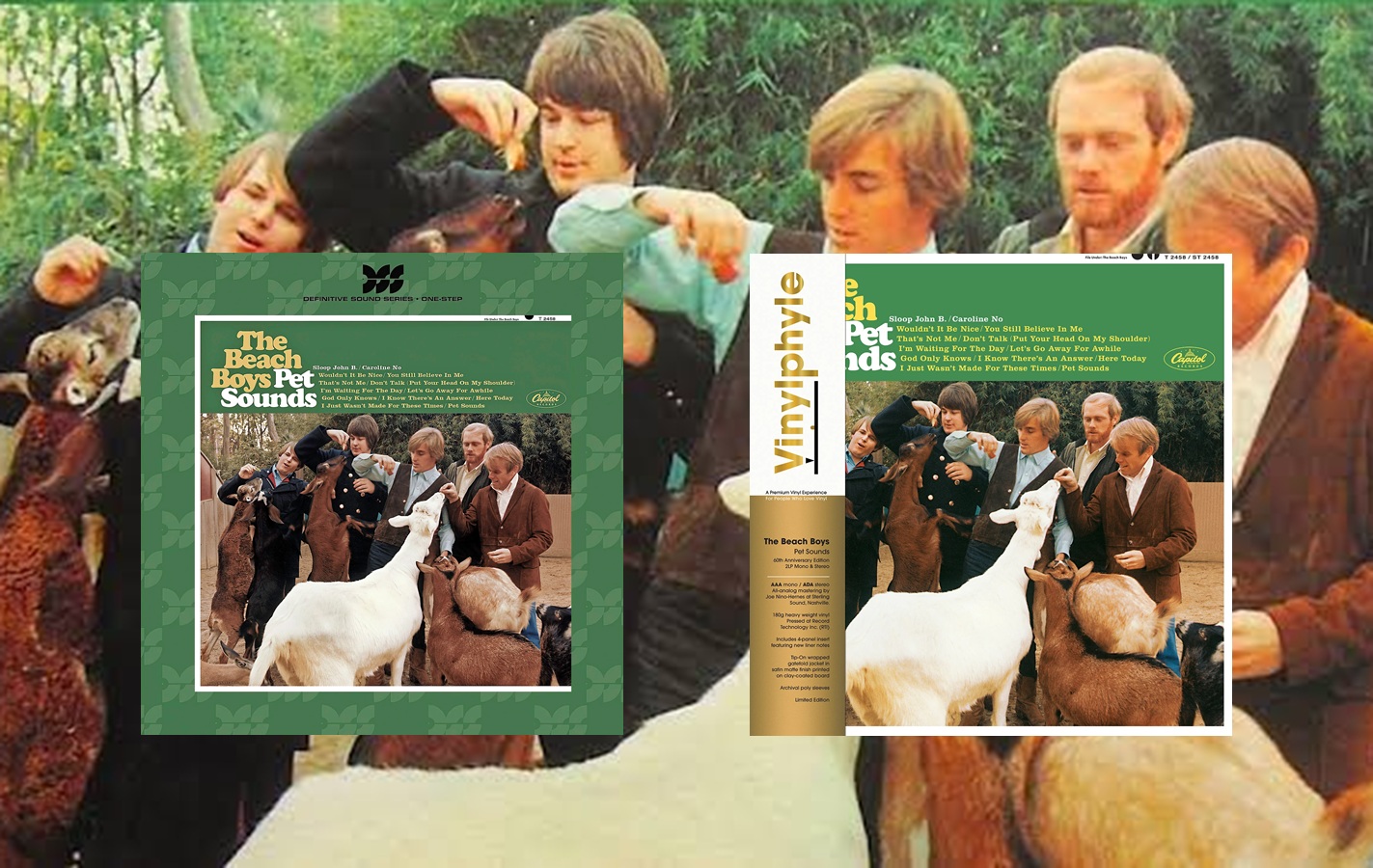
Image via Goldmine Magazine
Pet Sounds Turns 60, Still Teaching Us How Music Should Sound
The Beach Boys' Pet Sounds arrived in 1966, and sixty years later, they're pressing it on vinyl again—not just any vinyl, but two of the finest releases the album has ever received. The Capitol-Interscope Definitive Sound Series One-Step and the Capitol/UMe Vinylphyle editions may well be the best way anyone's ever heard Brian Wilson's masterpiece. For those of us who remember buying the original, this is like getting to taste your grandmother's cooking again, only somehow even better.
Pet Sounds wasn't just an album; it was proof that rock and roll could be art. Brian Wilson crafted it while the other Beach Boys were touring, layering instruments and voices in ways nobody had quite done before. Songs like "God Only Knows" and "Wouldn't It Be Nice" weren't just catchy—they were carefully constructed little symphonies about love and longing and the wonder of being young. When we first heard it through our console stereos in our living rooms, we knew something special was happening.
That they're giving it this kind of treatment six decades later tells you something. In an age when most people listen to music through earbuds connected to phones, someone still cares enough to press it properly on vinyl. Someone still believes music should sound like music, not compressed digital files. For those of us who remember the scratch and warmth of a needle finding its groove, that means everything.
📺 Jack's Thoughts: There's a reason vinyl came back, and it's the same reason Pet Sounds still matters. Real quality doesn't go out of style—it just waits for people to remember what they've been missing. Brian Wilson knew it in 1966, and it's still true today.
Back to the Future Was Rejected 44 Times Before It Changed Everything
Before Marty McFly hit 88 miles per hour in a DeLorean and became part of American culture, Back to the Future was rejected by every major studio in Hollywood—44 times. They thought it was too sweet, not edgy enough for the mid-1980s. Disney thought the mother's crush on Marty was inappropriate. But Bob Zemeckis and Bob Gale kept believing in their story about a teenager, a wild-haired inventor, and a time machine made from a car that looked like it came from tomorrow. When Universal finally said yes, it became the number one film of 1985.
We stood in lines around the block that summer to see it. The DeLorean speeding through the Twin Pines Mall parking lot, the clock tower, the Enchantment Under the Sea dance—it all felt like magic. Here was a movie that loved the 1950s without making fun of them, that showed a teenager learning to respect his parents by seeing them as young people with dreams. It was funny and thrilling and sweet in equal measure, exactly what those 44 studios said audiences wouldn't want.
The trilogy that followed kept that same spirit alive. Michael J. Fox and Christopher Lloyd became Doc and Marty so completely that you can't imagine anyone else in those roles. The movies trusted that audiences wanted optimism and adventure, not cynicism. They were right. Those films are still playing somewhere almost every week, still finding new fans, still reminding us that sometimes the craziest ideas turn out to be the best ones.
📺 Jack's Thoughts: Forty-four rejections before somebody believed in it—that's a reminder that the best things often have to fight their way into the world. Maybe that's why Back to the Future still feels special: it earned its place by refusing to give up, just like Doc and Marty themselves.
The best things in life—whether it's a song, an album, or a movie—tend to stick around because they were made with love by people who believed in them even when nobody else did. That's worth remembering tonight as you turn in. See you tomorrow evening. —Jack
— Jack Reynolds