Today’s Sponsor
While the crowd chases the same tired names, RushTheStreet is tracking the stocks that could move before the headlines hit — small caps on the verge of a breakout, AI plays building momentum, biotech approaching major milestones, gold & silver explorers, and companies with market-moving catalysts on the horizon.
October volatility creates opportunity — but only if you're watching the right names first. Don't let the next big mover disappear into the shadows before you even knew it existed.
Sign Up for RushTheStreet FreeBy clicking the link above, you agree to receive emails from rushthestreet.com. You can opt out at any time. — Privacy Policy

Tonight we take a gentle trip from an Edinburgh lecture hall to small-town main streets, then back to the era when rock still tried to grow up without losing its grit.
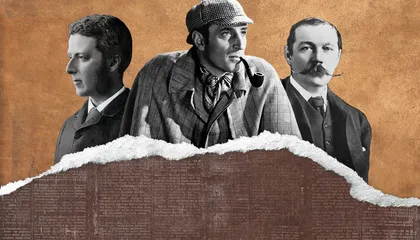
Image via Smithsonian Magazine
Before Sherlock, There Was Dr. Joseph Bell
When most of us picture Sherlock Holmes, we see the foggy London streets and that cool, clinical way he sizes a person up in seconds. But the truth is, Holmes didn’t come out of thin air. Smithsonian Magazine points to a real-life inspiration: Dr. Joseph Bell, a Scottish surgeon and lecturer in Edinburgh whose sharp observations could turn a patient’s posture, hands, and accent into a working diagnosis.
Bell wasn’t just a doctor with a good bedside manner. He trained students to watch closely and reason carefully, the way a craftsman learns to trust his tools. And as the account goes, his skills sometimes reached beyond the clinic, helping investigate crimes by noticing the little details others missed. Arthur Conan Doyle, who studied under Bell, took that method and poured it into literature, giving the world a detective who made careful thinking feel like an adventure.
Reading about Bell, I’m reminded of a time when we still taught young people to slow down, look closely, and think things through before speaking. There’s something deeply American about that kind of practical intelligence, too: measure twice, cut once, and don’t let a loud opinion outrun the facts. If we want a healthier public square, we could use a bit more Joseph Bell in our schools and a bit less rushing to judgment.
📺 Jack's Thoughts: I love that Sherlock Holmes traces back to a teacher who believed careful observation could change outcomes, not just win arguments. We’ve made “gut feelings” fashionable again, but the old-fashioned habit of paying attention is worth defending. A country that teaches its kids to notice, reason, and speak humbly is a country that stays steady.
Fifteen Towns That Still Feel Like an Earlier America
Only In Your State rounded up 15 towns across the country that feel like walking into a time capsule, and just seeing a list like that is comforting. Some places still have a main street you can stroll without checking the clock every ten seconds. You can imagine a hardware store where the clerk knows which bolts fit your project, or a diner where coffee is poured like it’s a neighborly duty.
What makes these towns special isn’t that they’re frozen in amber. It’s that they’ve held on to a certain rhythm: local pride, familiar faces, parades that still matter, and buildings that carry stories in their brickwork. In the America many of us remember, you didn’t need a vacation budget to feel restored; you just needed a day trip, a tank of gas, and a place where folks still wave.
These days, everything seems to get redesigned every five minutes, like permanence is something to be suspicious of. But there’s real strength in continuity. When a town keeps its character, it gives a family a sense of rootedness, and it gives a young person a quiet lesson in belonging.
📺 Jack's Thoughts: I’m all for progress when it’s honest progress, but I don’t believe we should pave over every reminder of who we’ve been. Towns that keep their traditions aren’t clinging to the past; they’re protecting the glue that holds communities together. If you can, take a Saturday soon and visit one of these places, not to escape the present, but to remember what’s worth carrying forward.

Image via Far Out Magazine
Rod Stewart, the 1970s, and the Hope That Rock Could Grow Up
Far Out Magazine revisits a moment from the 1970s when Rod Stewart talked about a band he believed could help “save rock,” praising them as “one of the best.” The idea was that rock music, like the people listening to it, had to mature a little. Not soften into something toothless, but grow some backbone and craft, the way a good songwriter learns that a strong chorus means more when it’s earned.
That was the thing about the best music from the ’50s through the ’80s: it wasn’t afraid of melody, and it wasn’t ashamed of sincerity. Even when it was rough around the edges, it usually had a point of view, a voice, and a band that had done its homework. You could dance to it, drive to it, or sit quietly and let it say what you couldn’t quite put into words.
Today the music business moves at a speed that would’ve made old radio programmers dizzy, and a lot of songs feel designed to vanish as fast as they arrive. But every so often, you hear a tune with real musicianship and a little moral weight behind it, and you remember: this isn’t just entertainment. It’s part of the national conversation, too.
📺 Jack's Thoughts: I appreciate Stewart’s instinct that rock didn’t need rescuing by gimmicks, but by maturity and musicians who respected the craft. We used to expect performers to earn their place, and listeners could tell the difference. If the next generation brings back honest songwriting and real playing, rock will do just fine.
That’s all for tonight, friends. Hold on to the good habits, keep a song in your pocket, and don’t underestimate the quiet power of places and people who refuse to forget where they came from. We’ll talk again tomorrow night.
— Jack Reynolds