Today’s Sponsor
America's national debt has blown past $40 trillion — and we're adding another trillion every five months. Interest payments alone now top $1 trillion a year, meaning borrowed money is paying interest on borrowed money. Economists call this a debt death spiral, and your retirement savings could be caught in the middle.
A new free report reveals the three ways governments escape a debt spiral, how purchasing power quietly erodes, and exactly how to move a portion of your savings into a financial safe haven before it's too late. No cost. No obligation. Delivered to your inbox in minutes.
Get the Free Debt Death Spiral ReportThis is an advertisement from American Alternative Assets. If you no longer wish to receive these promotions, unsubscribe here. American Alternative Assets | 21700 W Oxnard St, Suite 850, Woodland Hills, CA 91367.

Tonight we take a slow drive past a forgotten Mercury, tip our hat to a surprise comedy pick from 1940, and stroll back into Mayberry where “doin’ nothing” somehow got everything right.
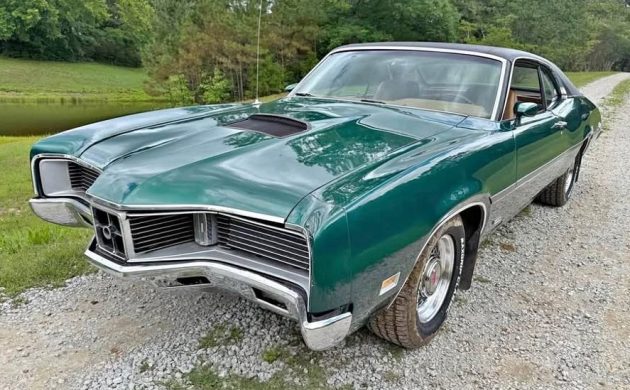
Image via Barn Finds
The Forgotten Muscle That Deserved Better: The 1970 Mercury Cyclone GT
Every so often, you run across a car that makes you wonder how it ever slipped through the cracks. The 1970 Mercury Cyclone GT is one of those. It had the looks for the muscle era, a name that sounded fast standing still, and all the ingredients to run with the big dogs of the day, yet it never sold in the numbers that Chrysler and GM managed with their headline-grabbers.
Reading about the Cyclone now feels like paging through an old family photo album and realizing you overlooked a cousin who was always quietly solid. Mercury sat in that middle space Ford used to do so well: a little more grown-up than the average bear, a little more polished, but still ready to rumble when you put your foot down.
There’s something downright American about the idea of a “forgotten” muscle car, too. Back then the showroom floors were crowded, and you could miss a good one simply because there were so many choices. Today, finding one of these is like finding a song you loved on the radio in 1970 and suddenly remembering every mile you drove with it playing.
📺 Jack's Thoughts: I’ve always believed a country is healthiest when it remembers its overlooked workhorses, not just its poster children. Cars like the Cyclone GT remind us that quality and character don’t always win the popularity contest, but they still matter. If we can learn to appreciate the “second page” stories again, we’ll be a little wiser and a little more grateful.

Image via Far Out Magazine
A 1940 Comedy Pick That Still Has Something to Teach Us
Bradley Cooper stirred up a fun little debate by calling a comedy from 1940 the greatest of all time, saying it felt innovative. That’s a bold claim in a world where everybody’s got a list and half the lists are built for arguments instead of enjoyment. Still, there’s something refreshing about a modern star looking that far back and finding real craftsmanship instead of just treating old films like dusty museum pieces.
What I love about those early comedies is how much they trusted timing, wit, and the audience’s attention span. The jokes weren’t always announced with a wink and a nudge. They let you lean forward a little, catch the rhythm, and then reward you with a laugh that felt earned.
It’s also a reminder that innovation didn’t start with our gadgets. Long before anybody carried a screen in their pocket, filmmakers were already taking chances with dialogue, pacing, and character. The best of it still holds up because human nature hasn’t changed nearly as much as we like to pretend.
📺 Jack's Thoughts: I’m glad someone with a big microphone is pointing folks back toward the old greats, because a culture that forgets its classics starts to lose its standards. The older comedies had a decency to them: sharp without being cruel, clever without being smug. If tonight’s entertainment world borrowed a little more from that playbook, we’d all sleep a bit better afterward.
Image via Click Americana
Mayberry’s Secret Ingredient: A Little Time to “Do Nothing”
The Andy Griffith Show didn’t need explosions, scandals, or snark to become a staple of American living rooms. It had a sheriff, a deputy, and a town where the biggest emergency might be a misunderstanding that could be solved on a front porch. As Click Americana reminds us, that simple formula carried the show for eight seasons, helped along by that whistled theme that still feels like taking a deep breath.
What made Mayberry work wasn’t that everyone was perfect. It was that people were knowable. You could tell who belonged to who, who needed a gentle talking-to, and who would come around once they’d had time to think it through. Even the troubles had a human scale, the kind you could imagine handling without calling a hotline, hiring a lawyer, or turning it into a national drama.
And then there’s that idea of “doin’ nothing,” which, if you’ve lived long enough, you know isn’t really nothing. It’s sitting still long enough to listen. It’s giving folks room to be themselves. It’s letting a day unfold without trying to conquer it.
📺 Jack's Thoughts: Mayberry reminds me that order doesn’t always require loudness, and community doesn’t require a committee meeting every five minutes. We used to understand the value of calm authority, neighborly patience, and problems kept at the size they belonged. If we want a little more peace in modern life, we could start by bringing back a little porch time and a little less rush.
That’s all for tonight, friends. Hold on to the good lessons, pass them down without lecturing, and remember: tomorrow’s America can still be a good one if we keep choosing steadiness, kindness, and a little common sense. See you back here tomorrow night.
— Jack Reynolds