Sponsored By:
History shows a clear pattern: the investors who recognized the exact inflection point in the dot-com boom pocketed 400–800% gains in 18 months. Those who spotted the same moment in cloud computing saw 300–600% returns. Based on 50 years of market data, that same moment is happening right now — and the acceleration phase has already begun.
This free 7-page report reveals where we are in the current megatrend cycle, why the next 18 months are critical, and how to position yourself before the window closes. Don't be the investor who enters too late.
Get the Free ReportBy clicking 'Get the Free Report' you are automatically subscribing to Darwin Investor Network and will receive a free subscription to the Chaikin PowerFeed newsletter. Unsubscribing is easy. Privacy Policy

A cowboy exhibit that tips its hat to truth and tall tales, a toy spud that’s changed with the times, and a 1972 Yes classic that still echoes through modern rock.
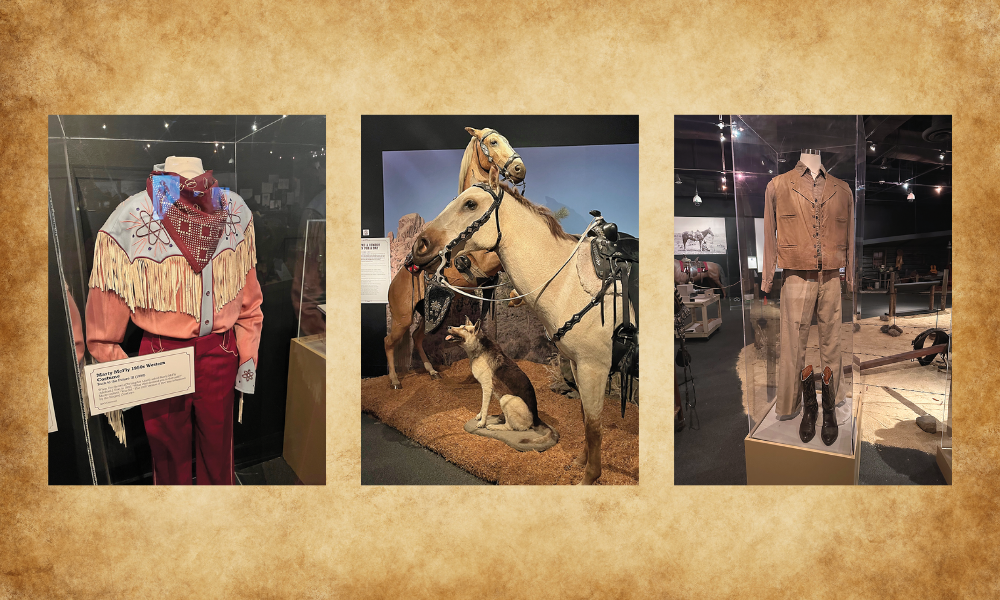
Image via True West Magazine
Cowboys, the Real Kind — and the Hollywood Kind, Too
There’s something steadying about the American cowboy, even for folks who never swung a leg over a saddle. A new exhibit highlighted by True West takes a clear-eyed look at both sides of the legend: the hard, dusty reality of ranch work and frontier life, and the cinematic myth that helped America tell stories about itself. The best Westerns always did a little of both — showing the grit while still letting us believe in courage, loyalty, and a man’s word.
One detail that warmed my heart: the story reaches back to 1983, when President Ronald Reagan spoke at the Library of Congress for the opening of its American Cowboy exhibit. Reagan understood something we’ve gotten shy about saying out loud: symbols matter. Not because they’re perfect, but because they remind a nation what it hopes to be — self-reliant, decent, and willing to do the hard job without complaining.
A good exhibit doesn’t just polish the boots and hang a white hat on the wall. It asks what was true, what was embellished, and why the cowboy endures in our imagination. If we can hold both the history and the storytelling together, we’re doing what grown-ups do: honoring the past without turning it into a fairy tale.
📺 Jack's Thoughts: I’ve always believed we need more places that teach history with affection and honesty at the same time. The cowboy myth never hurt us nearly as much as cynicism has — because the myth, at its best, points us toward bravery and responsibility. Tip your hat to the real men and women who worked that life, and enjoy the movies, too; America is allowed to have heroes.
Image via Click Americana
Mr. Potato Head and the Lost Art of Making Do
If you grew up in the years when a toy didn’t need a battery to be a good time, you probably remember Mr. Potato Head — and not the polished, pre-made version that sits neatly in a box today. According to Click Americana’s look back, the original 1952 Mr. Potato Head didn’t even come with a plastic potato. You supplied the real thing from the kitchen, then pushed in the little pieces with those sharp pins, making a face that was half comedy and half childhood creativity.
It also holds a special place in American living rooms as the first toy ever advertised on television. That detail says so much about the era: TV was new, families were gathering around it in the evening, and companies were just learning how to speak to kids through the screen. Back then, it still felt like the commercials were part of the show — and a lot of parents could still tell a child, “No,” without feeling they had to write an essay about it.
Over the years, Mr. Potato Head changed for safety, convenience, and modern tastes. Fewer sharp parts, more standardized pieces, and eventually that familiar plastic body. Some of that is perfectly sensible. But I can’t help noticing what we lost along the way: the small lesson that fun often begins with what you already have — and a little imagination.
📺 Jack's Thoughts: I’m glad kids can still meet Mr. Potato Head, but I miss the older message: look around the house, use your hands, and make something. The best play doesn’t always come from the store; it comes from a child learning to create, improvise, and laugh at a goofy face they made themselves. That’s the kind of “simple” we ought to preserve.
The Yes Song From 1972 That Still Shows Rock Bands How It’s Done
Every so often, a rock song comes along that doesn’t just top a chart — it changes the blueprint. Far Out Magazine points to a 1972 Yes track recognized by the Rock and Roll Hall of Fame as shaping modern rock, and that rings true to anyone who lived through the golden age of album rock. Back then, bands weren’t afraid to be ambitious. They trusted listeners to stay with a long intro, a surprising time change, or a soaring passage that felt almost symphonic.
In the ’70s, you could hear musicianship on the radio in a way that seems rarer now. You’d sit close to the speakers — maybe with the lyric sheet on your lap — and you’d listen, really listen. Yes had that big, bright sound that could fill a room, the kind that made you feel like the world was wider than your neighborhood, even if you were just a kid staring at the wood-paneled wall.
What’s striking is how modern rock still borrows from that era’s willingness to take risks: layered arrangements, big crescendos, and the idea that a song can be a journey. The technology is different today, but the hunger for something grand and well-made hasn’t gone away. People still respond when artists aim higher than “good enough.”
📺 Jack's Thoughts: I’ve always admired bands that treated music like a craft, not just a product. The ’70s weren’t perfect, but they gave us a standard: learn your instrument, respect the audience, and try to make something that lasts. If a 1972 Yes song is still teaching musicians today, that tells me quality still has a long shelf life.
That’s enough for one evening, friend. Pour something cold, put on a record that takes its time, and remember: a country that can still tell its stories — in museums, in toys, and in music — is a country that can still find its way forward.
— Jack Reynolds