Today’s Sponsor
When the U.S. government quietly takes ownership stakes in public companies, stocks don't just move — they explode. One tripled overnight. Another surged 200% before the market opened. A third went public days after a formal government partnership in one of the biggest tech IPOs in years. This isn't speculation — it's in the official filings.
A free report reveals all 24 companies named in the government's official partnership announcement, which ones you can trade right now, plus a bonus list of 5 companies where the government took direct ownership stakes — and exactly how each stock reacted when the deal went public. Straight from the source. Fully verified.
Get the Free Report NowClicking the link above subscribes you to future messages from Equiscreen, LLC and provides instant access to two additional bonus subscriptions from our marketing partners. Unsubscribe anytime. View Privacy Policy

Monday night reflections on how America learned to gather, to admire craftsmanship, and to remember its stars — with a hopeful look toward the week ahead.

Image via Smithsonian Magazine
How Thanksgiving Football Became a Postwar Habit That Stuck
When President Lincoln proclaimed Thanksgiving a national holiday in 1863, the country was still torn up by the Civil War, and the whole idea was to give Americans a shared moment to pause and remember what we had in common. Not long after, young men were looking for ways to channel energy, pride, and school spirit into something organized and public. Football, still rough around the edges in those days, offered a new kind of hometown pageantry.
The Smithsonian story traces how the first Thanksgiving football game arrived just six years after Lincoln’s proclamation, and how the holiday and the sport grew up together. By the time many of us were kids, Thanksgiving football wasn’t a novelty anymore; it was as natural as the smell of roasting turkey and the sound of relatives arriving at the front door. The NFL didn’t invent the tradition so much as inherit it, polish it, and beam it into living rooms across the country.
There’s something fitting about it: a holiday meant to unite Americans paired with a game that depends on teamwork, discipline, and everybody doing their job. Even when the world outside felt noisy, you could count on that steady rhythm — a table set, a game on, and a reminder that the country is at its best when we remember we belong to one another.
📺 Jack's Thoughts: I like that Thanksgiving football wasn’t born from marketing, but from a country trying to knit itself back together. The older I get, the more I appreciate traditions that bring different kinds of people into the same room, focused on the same simple thing. If we’re wise, we’ll treat these rituals less like background noise and more like glue.
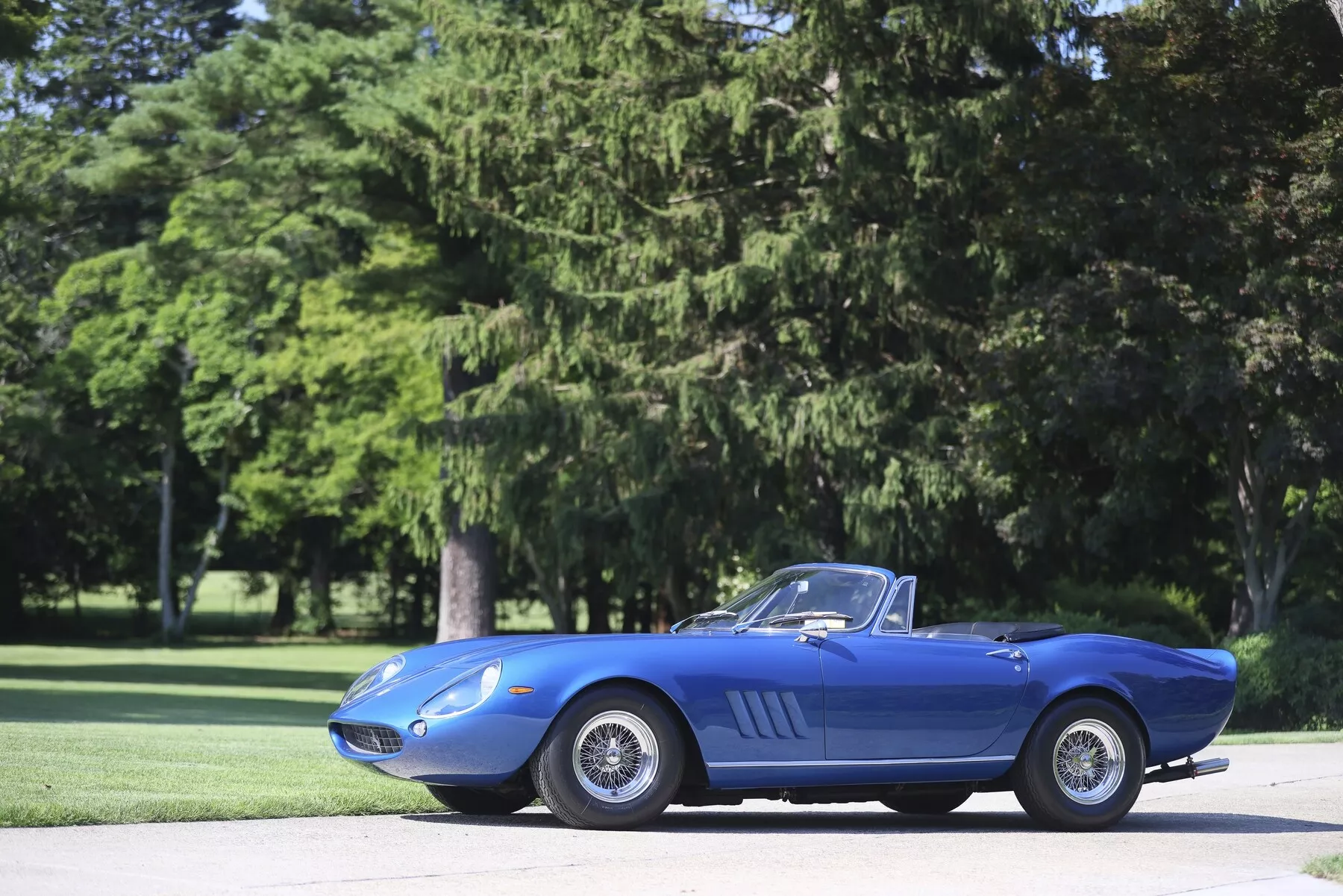
Image via Hagerty
The King of Cool’s Ferrari — and a Price Tag Fit for Legend
Some cars are transportation, and some are time machines. Hagerty reports that Steve McQueen’s Ferrari NART Spider just sold for $18.9 million, a figure that sounds like a whole zip code to most folks. Ferrari built only 10 of these NART Spiders, and only one went to McQueen — a man who didn’t just play cool on screen, but lived it in the garage.
For those of us who remember when a Sunday drive actually felt like an event, the NART Spider is more than a trophy. It represents an era when style had patience — long hoods, clean lines, and the kind of craftsmanship you could admire without a touchscreen in your face. McQueen understood machines the way some men understand music: not as a product, but as a relationship.
And there’s a funny thing about a sale like this. It isn’t only about wealth; it’s about what people choose to preserve. Somebody looked at that Ferrari and decided that a piece of mid-century American fascination — with speed, freedom, and good design — was worth keeping intact for another generation.
📺 Jack's Thoughts: No car needs to cost $18.9 million, but I’ll admit I’m glad this one was valued as history and not treated like scrap. The best machines from the old days were built to last, and they remind us that pride in workmanship is its own kind of wealth. I hope the new owner drives it at least once in a while — not hard, just enough to let it breathe.
📎 Hagerty
Avedon’s Hollywood: Glamour, Yes — But Also the Human Being
There was a time when movie stars felt larger than life, but not unreachable. Flashbak revisits Richard Avedon’s portraits of Hollywood’s biggest names, and the pictures carry that old, bright electricity — the kind you used to feel walking past the theater marquee on a Saturday night. Avedon understood the public face, but he also knew how to catch the quiet moment underneath it.
He once said that every photograph is accurate, and none of them is truth, and that line sticks with you when you look at celebrity portraits. Avedon’s camera could flatter, but it could also reveal: a tired glance, a guarded smile, the weight of being admired by millions. In an age before everyone had a camera in their pocket, a portrait session meant something, and the results had staying power.
For readers who grew up in the ’50s through the ’80s, these images can feel like postcards from a shared national living room. Back then, the culture wasn’t perfect, but it often had a common reference point — the same stars, the same shows, the same photos passed around in magazines at the barber shop or the beauty parlor.
📺 Jack's Thoughts: I miss when Hollywood glamour didn’t feel so manufactured, and Avedon’s work is a reminder that real artistry can make even fame look honest for a second or two. We’d do well to remember that behind every public image is a person, and that dignity shouldn’t be optional just because someone is famous. Looking at these portraits, I feel grateful for the era when craft — not just attention — was the goal.
📎 Flashbak
That’s the evening round-up, friends. As the holiday week approaches, I hope you find a little quiet time for gratitude, a good story at the table, and a tradition or two worth passing along.
— Jack Reynolds