Today’s Sponsor
Most retail traders are getting chopped up in 0DTE SPX options — not because they lack effort, but because they have no rules-based system. Pro trader Michael Love has taught 15,000+ traders his "Convert The Vert" method: one strategy, one ticker, and about a week of practice. He's breaking it all down — including his Time Of Day Secret and the Holy Shift pivot signal — in a completely free live webclass.
Michael demonstrates the entire approach live, so you see it working in real time — not just on a slide deck. Seats are limited and it costs you nothing to show up. If SPX options have ever felt chaotic or unpredictable, this is the session that changes that.
Reserve My Free Seat NowRisk Disclosure: Trading options involves substantial risk and is not suitable for all investors. You can lose some or all of your invested capital, and certain strategies can result in losses exceeding the initial investment. 0DTE options carry heightened risk due to rapid price movement and time decay, and positions can lose their entire value within a single session. Before trading options, read the OCC's Characteristics and Risks of Standardized Options at theocc.com. This webclass is for educational purposes only and is not investment, financial, or trading advice. Trade With Me Now is not a registered investment adviser or broker-dealer. Past performance is not indicative of future results. Examples are for illustration only. Testimonials reflect individual experiences and are not typical; results will vary. Never trade with money you cannot afford to lose. This is an advertisement for Trade With Me Now. Privacy Policy

Tonight we take a slow drive back through the late 70s, stop by a 1966 Halloween tradition, and finish with a sweet trip down the candy aisle of the 1980s.
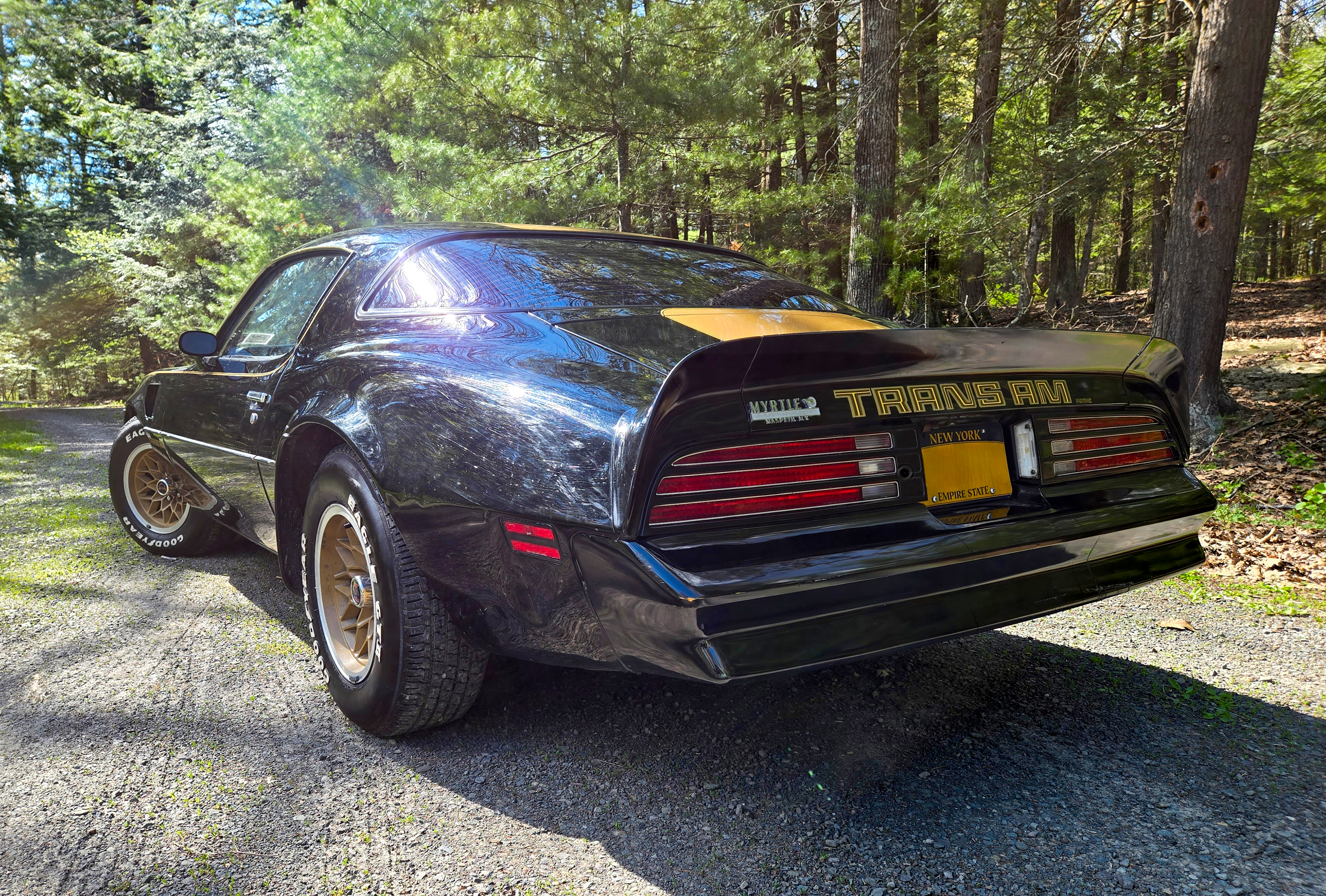
Image via Hagerty
The W72 Trans Am: When Style, Noise, and Nerve Still Sold Cars
There was a stretch in the mid-to-late 1970s when you could swear every other car in town was a Firebird, and if it wasn’t, it wanted to be. Even in an era folks like to call "malaise," Pontiac’s Trans Am had a way of cutting through the haze with decals, shaker scoops, and that unmistakable swagger. Hagerty’s look at a W72 Trans Am tied to a well-known drag-racing New York dealer reminds us how dealers and buyers kept the excitement alive even when the times were complicated.
The W72 package mattered because it represented one of those bright spots car people still talk about: a factory option that brought real personality and performance back to the conversation. These weren’t just transportation appliances; they were rolling statements, the kind a young working guy could dream about all week and then see gleaming under gas-station lights on Friday night. And when a car comes with a story connected to a racing-minded dealer, it carries that extra layer of Americana, where the showroom and the strip weren’t worlds apart.
What I enjoy most is remembering how a car like this could pull a neighborhood together without anyone planning it. One kid would hear the rumble, another would spot the bird on the hood, and pretty soon you had an impromptu gathering in a driveway. That’s not really about horsepower, when you get down to it; it’s about belonging.
📺 Jack's Thoughts: I’ve always thought the Trans Am was proof that Americans don’t quit on fun just because the headlines get gloomy. A W72 car, especially one linked to a drag-racing dealer, is a reminder that pride in craftsmanship and a little healthy flash used to be perfectly respectable. We could use more of that spirit today: build something bold, stand behind it, and let people enjoy what they’ve earned.
📎 Hagerty
Sixty Years Later, Charlie Brown’s Rock Still Tells the Truth
It’s hard to believe, but It’s the Great Pumpkin, Charlie Brown has been part of our autumn for 60 years. Families have been gathering around the TV for that familiar opening music, the trick-or-treating, the haunted humor, and Linus holding steady to hope in a pumpkin patch. DoYouRemember dug into one detail that somehow sticks with everyone: while the other kids got candy, Charlie Brown got a rock.
The gag works because it’s both funny and a little sad, which is exactly how childhood can be. The piece explains the thinking behind the joke back in 1966 and shares what viewers actually mailed after seeing Charlie Brown’s lousy haul. That’s the part that gets me: people cared enough to put something in an envelope and send it, like America collectively decided, "No kid should have to carry that much disappointment alone."
There’s something gentle in that old TV tradition, too. You didn’t need special effects or a franchise universe to make a lasting classic. You just needed a handful of ordinary feelings, a simple story, and the confidence that families would still sit together and watch the same thing at the same time.
📺 Jack's Thoughts: Charlie Brown getting a rock still lands because it’s honest: life isn’t always fair, and sometimes you’re the one holding the bag. But I love that viewers responded with real mail, because it shows an older American reflex I admire: when something feels wrong, you try to make it right. If we kept more of that neighborly instinct, we’d all be better off.
The 80s Candy Aisle: When a Dollar Felt Like a Treasure Chest
If you grew up in the 1980s, you remember the candy counter like it was its own little country. Bright wrappers, bold names, and that thrilling moment of choice when you could turn a crumpled bill into a pocketful of sweetness. Click Americana rounded up a whole lineup of retro favorites, with the kind of old ads and packaging that instantly brings back corner stores, school fundraisers, and movie-theater concessions.
What strikes you looking back is how much personality those candies had. It wasn’t just chocolate or fruit flavor; it was a tiny bit of identity you carried around in your jacket pocket. Some of those classics are still with us, but even the ones that disappeared still live on as a shared memory, the way certain songs do.
And there’s another layer to it, too: the candy aisle was a small lesson in freedom and restraint. You got to choose, you learned what your money could do, and you discovered pretty quickly that if you ate it all at once, it was gone. Simple, sweet, and surprisingly educational.
📺 Jack's Thoughts: I miss when small treats felt special, not because we had less, but because we made more meaning out of the little things. Those old 80s candy favorites remind me that joy doesn’t have to be expensive or complicated. Sometimes it’s just a familiar wrapper, a shared laugh, and the comfort of knowing some traditions stick around.
That’s it for tonight, friends. Whether it’s a Trans Am rumbling past the streetlights, Charlie Brown keeping his chin up, or a favorite candy you haven’t thought about in years, I hope something here reminded you: the best parts of America are still worth remembering, and still worth passing on. See you tomorrow night.
— Jack Reynolds