A rare signal just fired. One of Alpha Wire Daily's most reliable indicators — the kind that doesn't trigger often — just flagged a quiet small-cap that's historically appeared right before major announcements, institutional buying surges, and sharp price moves. Most investors haven't noticed it yet.
The team at Alpha Wire Daily put together a full briefing: company name, chart setup, and exactly why this one made the cut. They'd rather send you one email that matters than fifty that don't. This is that email — but it won't stay timely for long.
Read the Free Report + Get Alert AccessWe encourage readers to perform their own research and due diligence on any information we provide. By clicking the link above you will automatically be subscribed to the Alpha Wire Newsletter. Privacy Policy

Tonight we're remembering the decade that gave us disco balls, station wagons with real character, and rock voices that could move mountains.

Image via Mental Floss
Test Your Memory: The Decade That Danced
Mental Floss is inviting readers to dust off their memories with a collection of trivia questions about the 1970s, that remarkable decade when America seemed to be dancing through uncertainty with bell-bottoms and a disco beat. It was the decade that gave us Saturday Night Fever, The Godfather, and music that ranged from the Bee Gees to Led Zeppelin. Every question is a little time capsule from an era when entertainment meant gathering around one television set or spinning a vinyl record until you knew every scratch and skip by heart.
The seventies had a way of being both gritty and glamorous at once. We were dealing with gas lines and economic uncertainty, yet the movies were spectacular and the music was unforgettable. Kids could still play outside until the streetlights came on, and a family could afford a night out at the drive-in theater with money left over for burgers afterward. The trivia questions remind us of moments we lived through together as a nation, before we all retreated to our separate screens and streaming services.
These weren't just entertainment questions. They're breadcrumbs back to a shared American experience. Whether you remember watching the Waltons on Thursday nights or saving up your allowance for that new Fleetwood Mac album, the seventies were a time when we might have disagreed about Nixon or Carter, but we all hummed the same songs on the radio.
📺 Jack's Thoughts: I hope folks take a moment to test themselves on this one. It's more than nostalgia—it's remembering when America had a common culture that brought us together instead of algorithms that pull us apart. Those shared memories matter more than we realize.
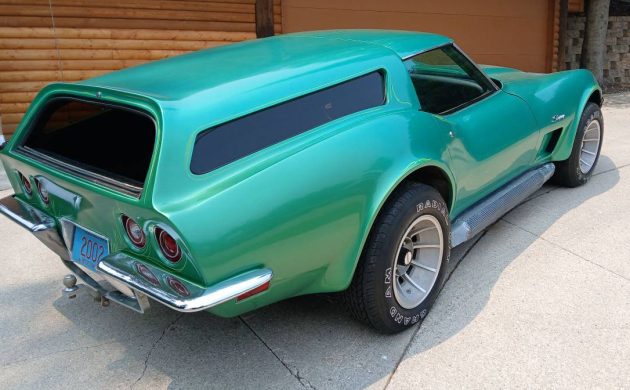
Image via Barn Finds
The Corvette That Dared to Be a Family Car
Someone with vision and a welding torch created something remarkable back in 1973: a Chevrolet Corvette station wagon. Yes, you read that right. This rare SportWagon conversion took America's sports car and gave it the practicality of a family hauler, and the result is the kind of automotive creativity that makes you smile. Found on Barn Finds, this unusual machine represents an era when car enthusiasts weren't afraid to tinker, modify, and create something that Detroit never imagined.
Back in the seventies, station wagons were the backbone of American families. They hauled kids to Little League, luggage to summer vacations, and groceries home from the A&P. But they weren't supposed to have Corvette performance. This conversion married the best of both worlds—the sleek lines and power of a Stingray with the cargo space mom needed. It was the kind of project that happened in garages across America, where dads and sons worked together with wrenches and dreams.
The beauty of this find is that it reminds us of a time when cars had personality and owners had the freedom to make them their own. You didn't need a computer engineering degree to modify your vehicle. You needed some mechanical aptitude, determination, and the willingness to try something different. That spirit of American ingenuity, the idea that you could build something with your own hands that nobody else had, is something worth preserving.
📺 Jack's Thoughts: This Corvette wagon is more than a curiosity—it's a reminder that innovation used to happen in home garages, not just corporate design studios. We've gained safety and efficiency in modern cars, but we've lost some of that personal connection between man and machine.

Image via Far Out Magazine
When Dave Davies Found His Voice
Far Out Magazine is celebrating a 1968 recording that showcased Dave Davies of The Kinks at his absolute vocal best. While his brother Ray often grabbed the spotlight, Dave had a raw, powerful voice that could convey emotion in ways that the smoother singers of the era couldn't match. The song in question let Dave step out from behind his guitar and deliver what many consider his finest vocal performance, proving that sometimes the quiet one in the band has the most to say.
The late sixties were an incredible time for rock and roll. The British Invasion had matured beyond the simple love songs, and bands like The Kinks were crafting music with real depth and feeling. Dave Davies represented something authentic in an industry that was rapidly becoming more produced and polished. His voice had grit and honesty, the kind of quality that came from genuine feeling rather than studio manipulation.
Listening to recordings from that era, you can hear the difference immediately. There were no auto-tune corrections, no digital smoothing. What you heard was what the artist delivered in that moment, imperfections and all. That authenticity created a connection between performer and listener that felt personal and real. The technology was simpler, but somehow the emotion came through stronger.
📺 Jack's Thoughts: Dave Davies never got the recognition he deserved, but that 1968 performance stands as proof that real talent doesn't need gimmicks. In an age when computers can make anyone sound pitch-perfect, it's worth remembering that raw emotion and honest delivery matter more than technical perfection.
Tonight, maybe put on some old vinyl, remember when music made you feel something deep in your chest, and be grateful you were there for it. The good old days weren't perfect, but they were ours. — Jack
— Jack Reynolds